What Does Diversification Really Mean?
For many farmers, the word “diversification” can still feel slightly uncomfortable.
Sometimes it sounds like moving away from farming altogether.
Sometimes it feels like admitting the farm itself is no longer enough.
And sometimes it can create the fear that farming businesses are slowly becoming everything except farms.
But in reality, good diversification is rarely about giving up farming. Very often, it’s about protecting it.
Over the years, we’ve had countless conversations at Squab Hall Farm where people have openly asked:
“Does farming even have a future?”
“Should we stop altogether?”
“Is it worth carrying on?”
And honestly, those conversations are understandable in the current climate.
- Margins are tight.
- Pressure is high.
- The uncertainty around the future of the industry can feel relentless at times.
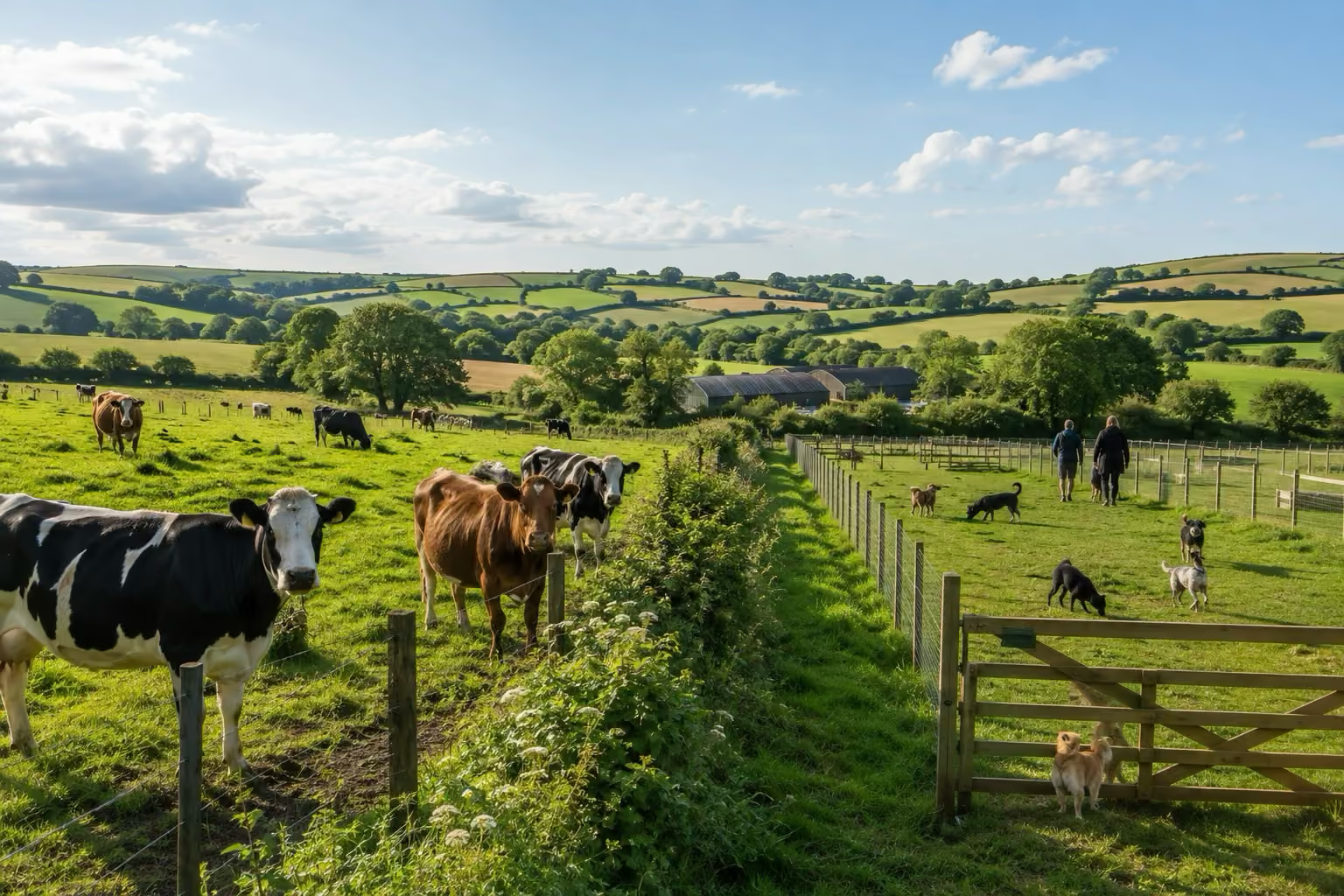
But what’s interesting is that whilst those conversations were happening, something else was happening too. The business was evolving. What started as a traditional farming business gradually grew into something broader:
- Boxes
- Storage
- Removals
- Workspace
- A dog field
- A Café
and other rural enterprises alongside it, and importantly, farming didn’t disappear.
In many ways, diversification allowed the farming business to continue stronger than before.
- It created income streams that reduced pressure elsewhere.
- It allowed investment back into the wider business.
- It created the ability to employ a farm manager.
- And ultimately, it created more time and headspace to focus on farming properly rather than constantly firefighting financially.
The result?
The farm has continued to grow and evolve, including taking on land in other locations to continue farming operations.
That’s the bit people often miss when they hear the word diversification.
Diversification should not necessarily distract from farming. Done properly, it can actually support it.
- It can create stability during difficult years.
- It can spread risk.
- It can allow better planning.
- It can give businesses breathing space to think longer-term rather than constantly surviving season to season.
- And perhaps most importantly, it can help create a future that keeps the next generation engaged in the business.
Because another reality many farming families quietly face is this:
Younger generations often want to stay connected to farming, but they may also want variety, opportunities and the ability to build something of their own alongside it. That doesn’t mean they care less about farming. If anything, many care deeply about protecting it.
But they may also see a future where farming businesses need to be more flexible, commercially diverse and adaptable in order to survive long term.
Of course, those conversations are not always easy.
For generations who have dedicated their entire lives to farming, diversification can sometimes feel unfamiliar or uncomfortable at first. Farming is not simply a job, it is identity, history, pride and family legacy all wrapped into one.
That deserves huge respect.
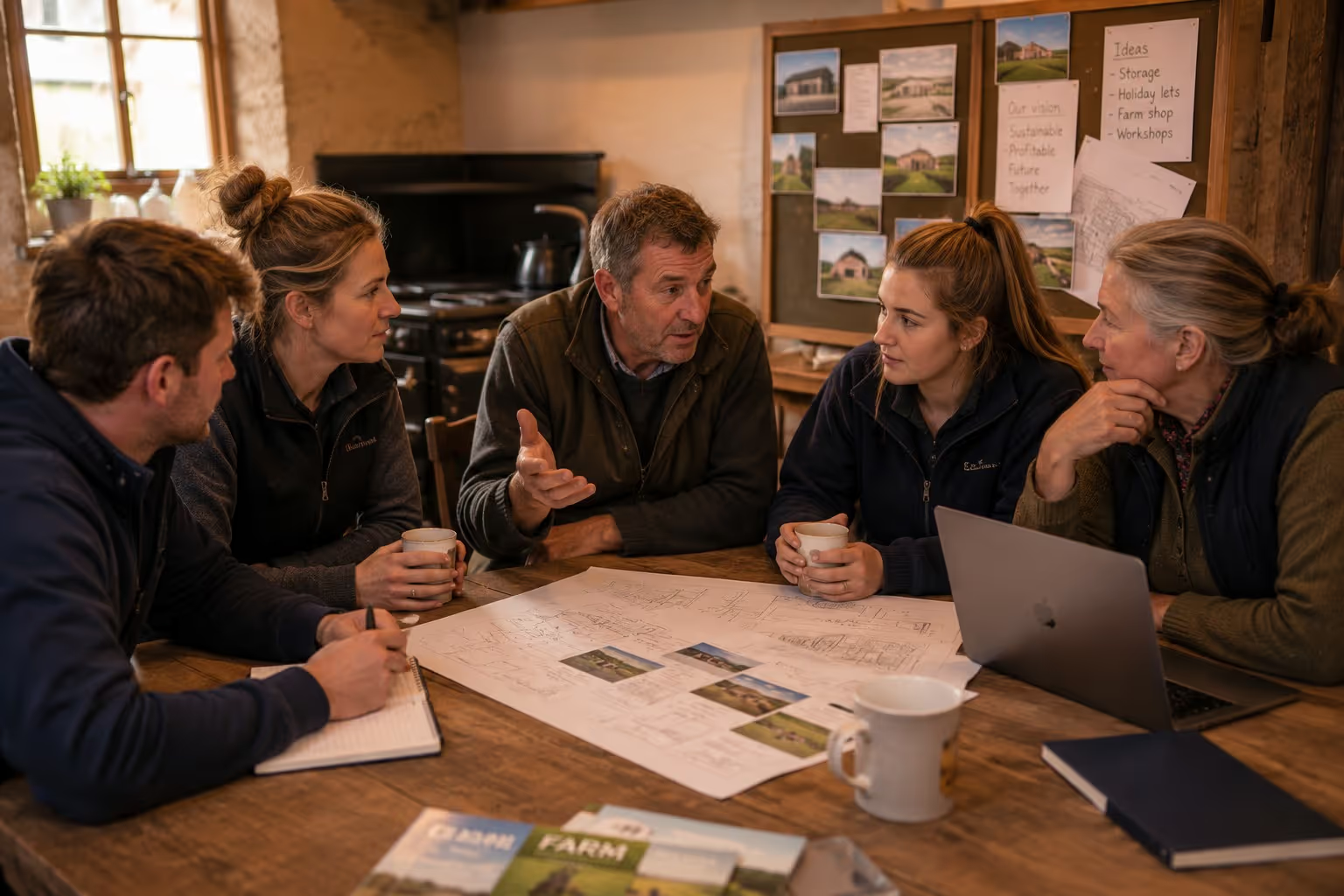
But some of the most successful diversified farming businesses we see are the ones where generations begin having open conversations together about what the future could look like, not abandoning farming, but strengthening it.
Because diversification is not about replacing the farm.
It is about asking:
“How do we build a business around the farm that gives it the best possible chance of surviving and thriving for generations to come?”
For some businesses, that might mean commercial units in old buildings. For others, holiday accommodation, renewable energy, storage, cafés, dog fields, events or workspace conversions.
There is no single blueprint.
And that’s where many farming businesses become stuck. Not because there aren’t opportunities, but because it can be difficult to know:
- where to start,
- what’s realistic,
- what suits the farm,
- what stacks up financially,
- or how to balance diversification alongside the day-to-day demands of farming itself.
That’s exactly why The Diversified Farmer exists.
Not to push unrealistic ideas or “quick wins”, but to help farming businesses explore genuine opportunities in an honest, practical and commercially realistic way. Because every successful diversification project starts in exactly the same place:
A conversation about the future.
And increasingly, the farming businesses willing to have those conversations now are the ones giving themselves the best chance of protecting the thing they care about most in the long run.
The farm itself.