Can Diversified Businesses Be Used to Support the Farm — Not Replace It?
There’s an increasing conversation happening within agriculture around diversification and whether farming businesses should rely on it to survive.
Recently, comments made within the industry suggested that if the profitable side of a business comes from diversification rather than farming itself, then perhaps farmers should question why they are still farming at all.
And whilst there is logic behind those comments from a purely commercial perspective, we believe the conversation is far more complex than that.
Because farming is not simply another business sector.
- It is food production.
- It is stewardship of the countryside.
- It is generations of history, knowledge and identity.
- It is rural employment, local communities and national food security.
And at a time when British farmers are facing pressure from almost every angle imaginable, should we really be criticising businesses that are finding ways to continue farming through diversification?
Or should we be recognising the resilience behind it?
The reality is, many farming businesses are not diversifying because they have “fallen out of love” with farming. They are diversifying because they want to protect it.
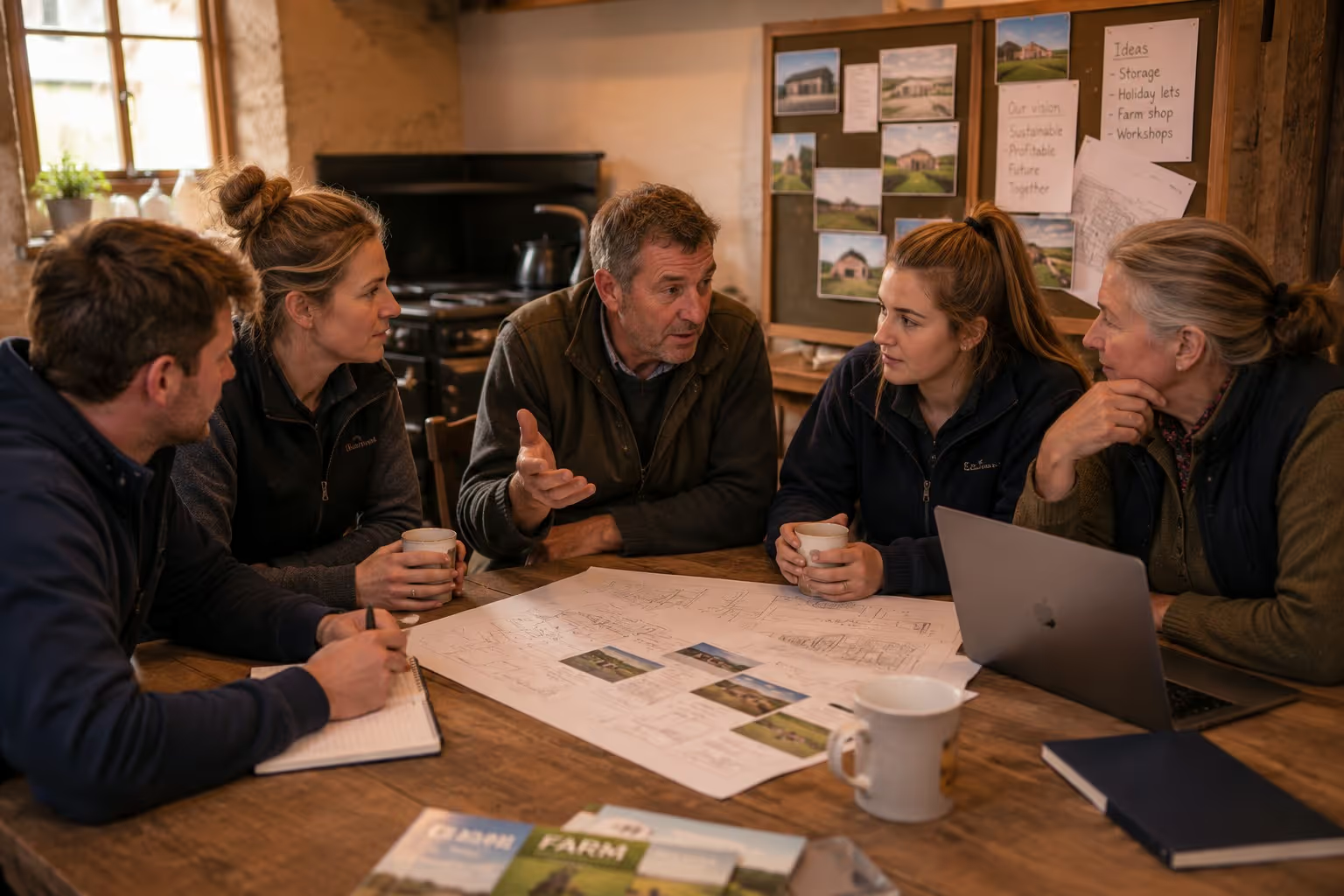
There have been countless conversations with amongst farming families over the years around whether farming alone was enough to sustain the future of the business long term.
Serious questions were asked:
- Do we keep going?
- Can farming alone support the business?
- What does the future actually look like?
But instead of walking away from farming altogether, the businesses evolved around it.
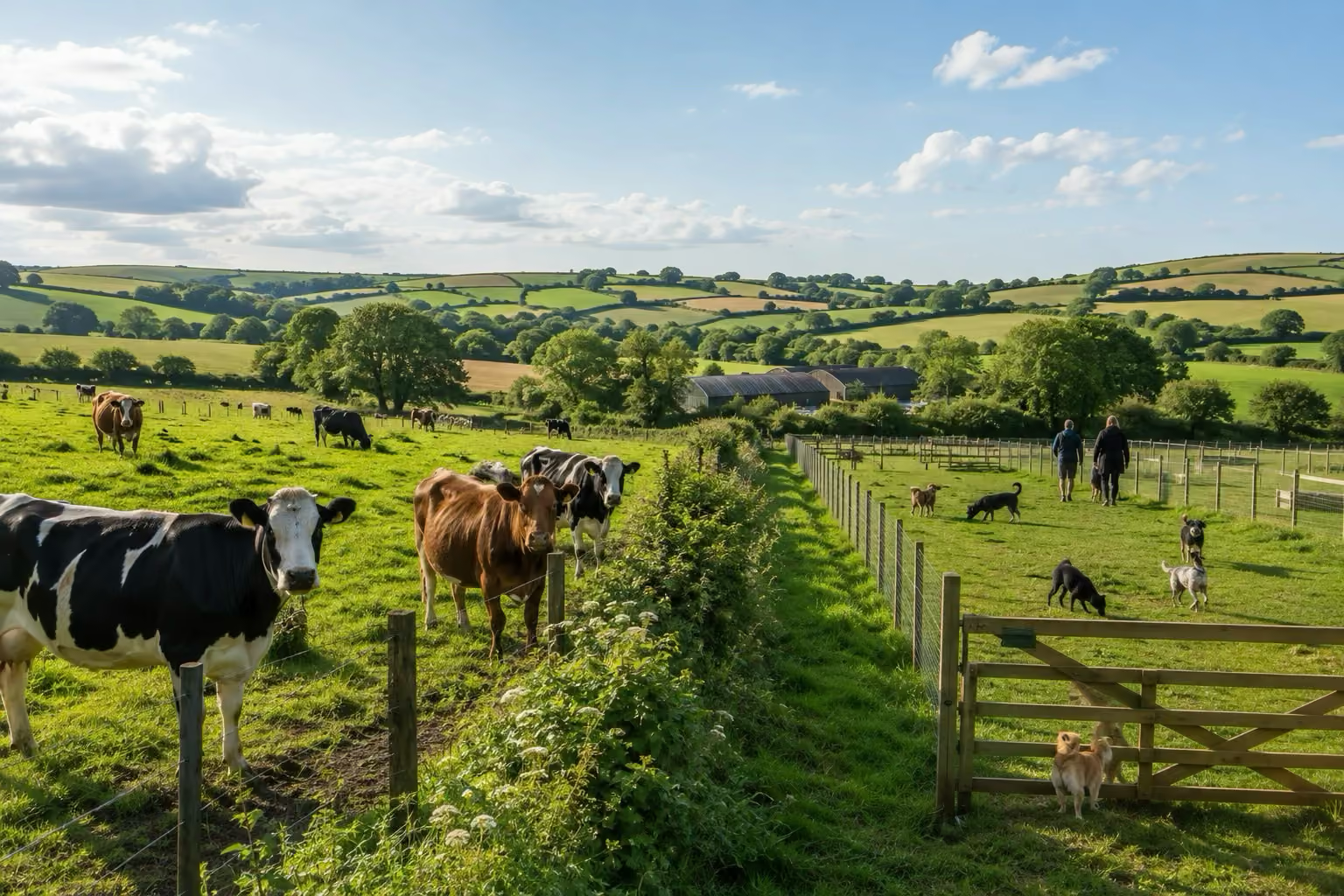
- Container storage
- Dog Walking
- Classic Car Storage
- Padel courts
- Play barn/cafe
- Horse box coffee
- Farm shop
- Camping/glamping
to name a few.
And importantly, farming remained at the heart of it all.
In fact, diversification helped strengthen the farming operation itself.
- It created stability.
- It reduced pressure on the farm during difficult periods.
- It created income streams that allowed investment back into the wider business.
- It allowed specialist management to be employed.
- And perhaps most importantly, it created the time and headspace to focus on farming properly and continue growing the farming side of the business.
The result was not less farming. In many ways, it enabled more. Land has continued to be farmed. Additional land has been taken on in other locations. Investment and long-term thinking became more possible because the businesses were no longer relying on a single income source to carry everything alone.
So when people say:
“If the profitable part of the business is weddings or events, why farm the land at all?”
Perhaps the better question is:
“If diversification allows a farm to continue farming, why is that seen as failure?”
Because the uncomfortable truth is this:
If British farming businesses are expected to survive solely on increasingly squeezed margins whilst facing rising costs, policy uncertainty, labour pressures, environmental demands and volatile markets, many simply will not survive long term without adaptation.
And Britain still needs farmers.
We still need domestic food production.
We still need rural businesses.
We still need people managing land, producing food and investing in the countryside.
So perhaps diversification should not always be viewed as “moving away” from farming.
Sometimes it is exactly what allows farming to continue. Of course, diversification is not a magic fix.
Poor decision-making, unsustainable models or unrealistic projects can create just as many problems as they solve. Diversification should never simply become a distraction from underlying business issues. But equally, adaptation has always been part of farming.
Farmers have continually evolved over generations:
- new machinery
- new technologies
- contract farming
- renewable energy
- direct sales
- environmental schemes
- collaboration
- tourism
- commercial property
- alternative enterprises.
Diversification is simply another version of that evolution. And for many farming families, it is becoming less about “growth” and more about resilience.
About creating businesses that can absorb difficult years.
About generating income that allows reinvestment into better technology, infrastructure and people.
About creating opportunities for future generations to stay connected to the farm rather than feeling forced to leave it behind altogether.
Because perhaps one of the greatest risks facing farming today is not diversification itself. It is the idea that farms should simply accept decline rather than find new ways to survive through it.
At The Diversified Farmer, we believe diversification should not be viewed as giving up on farming. When done properly, it can be one of the strongest tools available to protect it.
Not replacing the farm.
Supporting it.
Strengthening it.
And giving it the best possible chance of surviving for generations to come.